Trade login required for specs & pricing
Material categories
Five block categories sourced across our quarry network. Characteristics below are general, industry-standard material properties, not a claim about a specific quarry or lot — exact grading and specification are confirmed per container once a trade account is active.
01
granite
An igneous rock formed from slowly cooled magma, granite is prized in the trade for hardness, scratch resistance and a crystalline, speckled grain. It is widely used for countertops, flooring, cladding and monument work where durability under daily wear matters.
- · Igneous rock
- · Mohs hardness ~6–7
- · Low porosity
- · High compressive strength
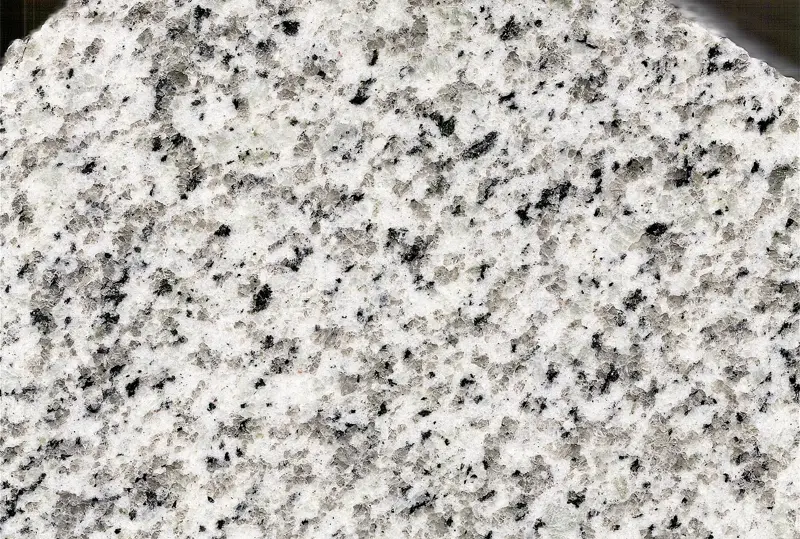
Photo: James St. John, Wikimedia Commons, CC BY 2.0
Material-grain study
02
marble
A metamorphic rock formed from recrystallized limestone, marble is valued for its characteristic veining and polish. It is softer and more porous than granite, which makes it a trade favorite for interior surfaces, flooring and sculptural work where finish quality is the priority.
- · Metamorphic rock
- · Mohs hardness ~3–4
- · Moderate porosity
- · Takes a high polish
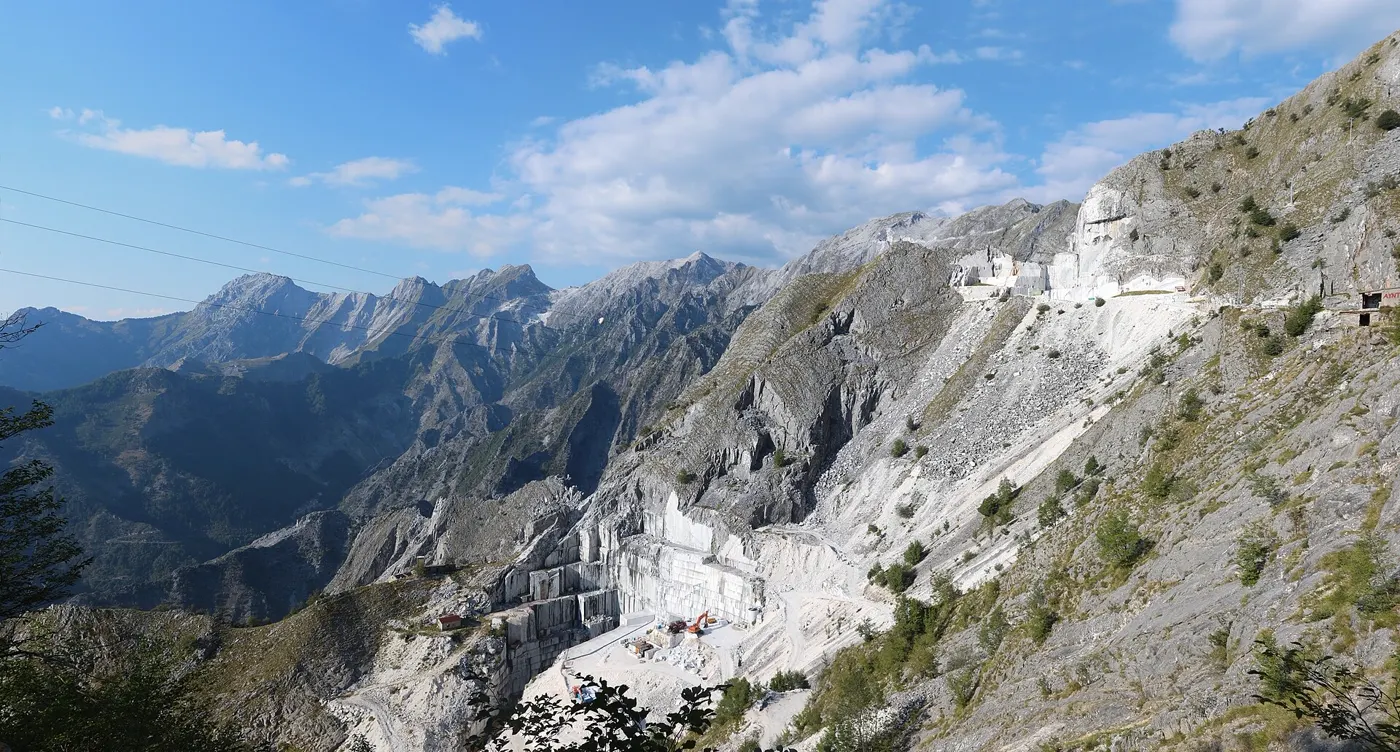
Photo: Ingo Mehling, Wikimedia Commons, CC BY-SA 4.0
Material-grain study
03
travertine
A form of limestone deposited by mineral springs, travertine is known for its naturally porous, banded texture. Common in flooring, wall cladding and outdoor paving, it is typically sold filled and honed, or unfilled for a more rustic finish.
- · Sedimentary rock
- · Mohs hardness ~3–4
- · Naturally porous/banded
- · Common fill or honed finish
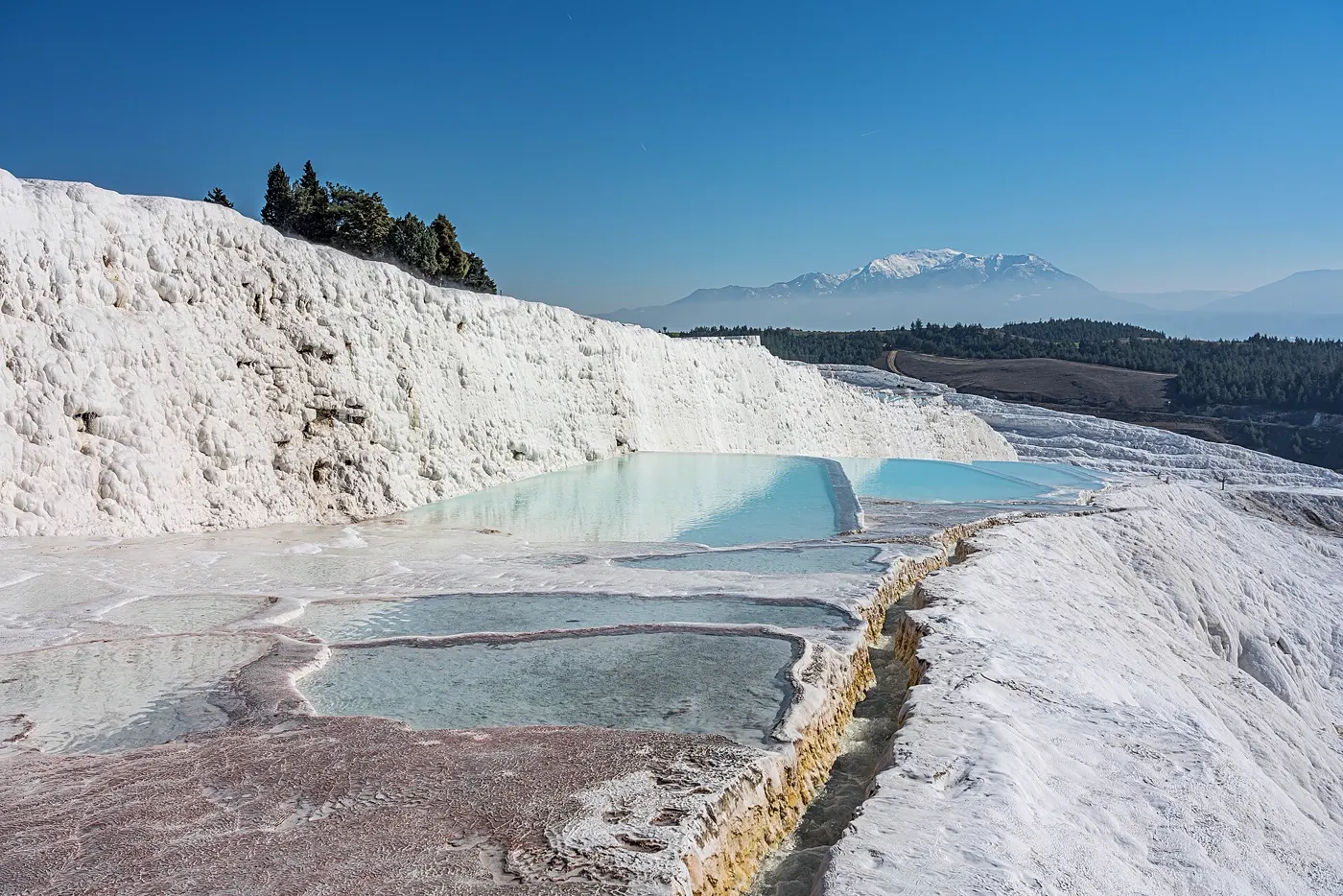
Photo: A.Savin, Wikimedia Commons, FAL
Material-grain study
04
limestone
A sedimentary rock formed from compacted marine deposits, limestone has a consistent, fine-grained texture and reads as a quieter, more uniform material than granite or marble. It is widely used in cladding, flooring and architectural stonework.
- · Sedimentary rock
- · Mohs hardness ~3–4
- · Fine, uniform grain
- · Common in architectural cladding
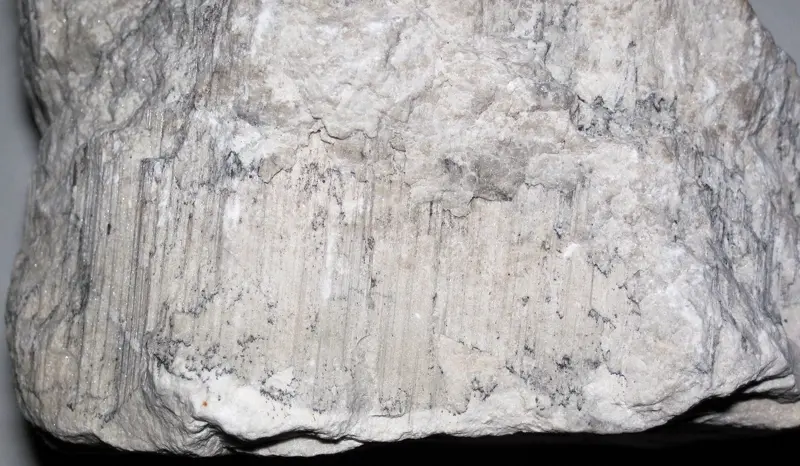
Photo: James St. John, Wikimedia Commons, CC BY 2.0
Material-grain study
05
basalt
A fine-grained volcanic rock, basalt is dense, dark and known in nature for its distinctive hexagonal column-jointing as it cools. In the trade it is valued for strength and a minimal, matte finish, and is common in paving, cladding and landscape work.
- · Igneous (volcanic) rock
- · Mohs hardness ~6
- · Very low porosity
- · Dense, fine grain
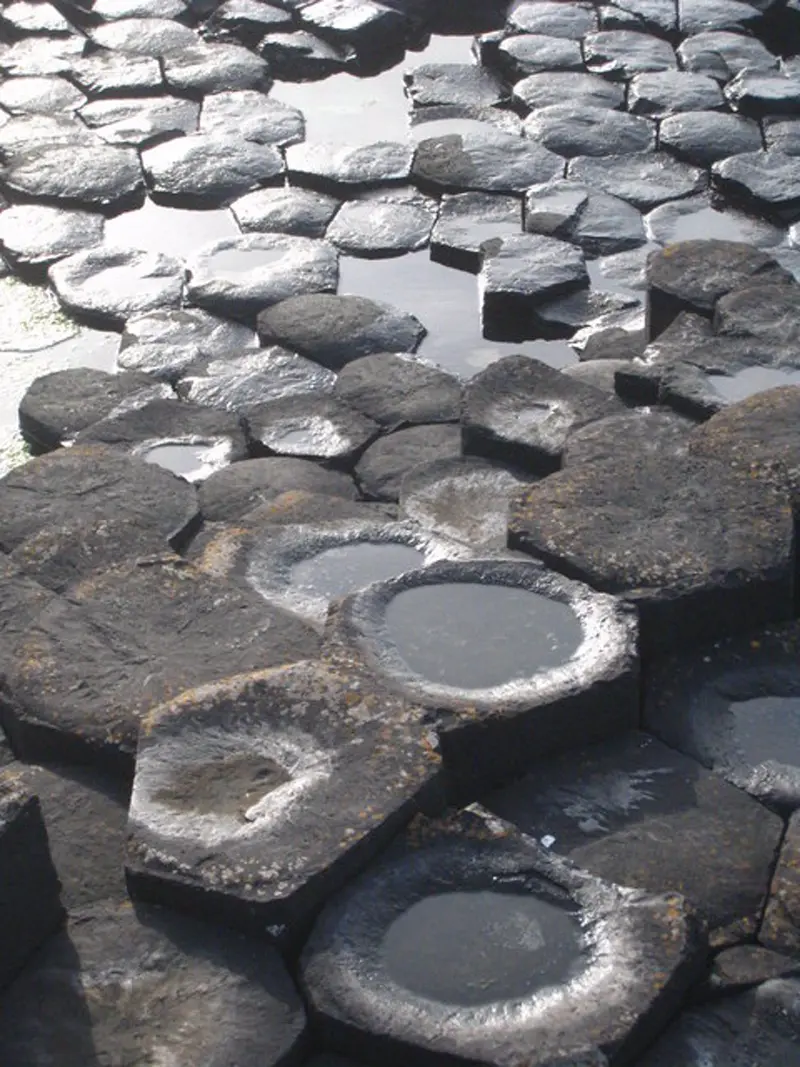
Photo: Rod Allday, Wikimedia Commons, CC BY-SA 2.0
Material-grain study